I am going to go out on a long and fragile limb here and say that the Supermarine Spitfire was over-rated.
In wartime. propaganda is a vital tool. Believing your own propaganda is downright dangerous. Promote an idea, a concept, a product well enough and well…some people would eat a $#@& sandwich!
Then, and now, the Spitfire is placed on a pedestal, held up as the ultimate fighter of WW2, a war-winner, the glamour fighter aircraft of Britain, the best of the best.
But was it? Or, was it the subject of hyperbole?
So, let’s look at what the Spitfire was designed for – as an interceptor and as a fighter-against-fighter aircraft.
First, let’s have a look at those highly-acclaimed elliptical wings often held out to be a major reason in the Spitfire’s success – well, at least in its public “image.” Yes, it was efficient in the lift that it imparted. No, at 50mph it created so much lift that Spitfires “floated” on landing, a fault that made the Seafire particularly vulnerable in carrier landings. It was so efficient that its roll rate left a lot to be desired and a clipped wing version made for better lower altitude performance. If the elliptical wing was so good, how come so many successful fighters had straight-edged wings? What other successful fighter had elliptical wings? Errr….none that I can think of. Also, it was an expensive wing – complicated – to make and difficult to repair. Indeed, the Spitfire generally was an expensive plane to build, expensive and difficult to repair, especially compared with the rugged but rapidly becoming obsolescent Hawker Harrier.
The Spitfire had no less than 8 rifle-calibre (.303”) Browning machine guns (the A wing). Much was made of this at the time. Wow! Eight guns! Imagine that? But the shortcomings of rifle-calibre guns against all-metal, stressed-skin aircraft soon became evident and, eventually, two of the slower-firing Hispano 20mm cannon with its much more destructive projectile were fitted at the expense of four of the machine guns. (the B wing) Machineguns = rate of fire. Cannon = weight of fire. Later development of what was known as the Universal or C wing allowed for different armament combinations. Later developments deleted the four .303” guns for a pair of the harder-hitting .50” heavy machine gun (the E wing).
Now for the Merlin engine. For some unknown reason, probably conservatism mixed with the keep-doing-it-the-way-it’s-always-been-done attitude, the Spitfire had a carburettor rather than fuel injection. This resulted in fuel starvation during negative-G manoeuvres. Not a nice feeling to suddenly lose power and speed. Couple this with a basic nose-heaviness meant the Spitfire lost height quickly. Spins below 3,000ft were banned as likely fatal.
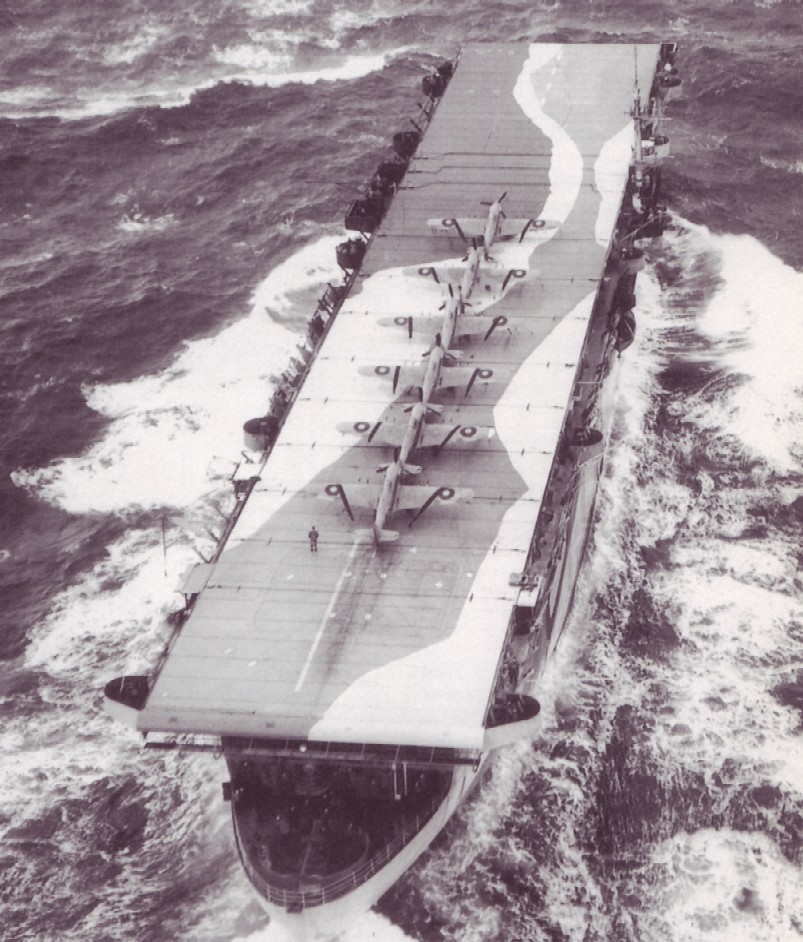
While pilots praised its handling – “a delight to fly”- its long nose made visibility when taxiing precarious. Its narrow landing gear (which folded outwards) was fragile at the best of times and often resulted in ground looping accidents. The undercarriage proved totally inadequate in the Seafire versions which had to cope with short, arrested, and heavy deck landings.
Spitfire pilots sat very straight up in the cockpit making it harder to cope with high G manoeuvres whereas being more laid back allowed pilots to better cope.
The variable pitch propeller was introduced to the Spitfire in 1939. This meant pilots had to manually adjust pitch relative to engine speed and airspeed, a distraction from maintaining vital situational awareness. Constant speed propellers only began to appear in time for the Battle of Britain. And that raises another fact than many overlook: the Hawker Hurricane principally attacked the bombers while the Spitfires took on the escorting fighters. Around 60% of Luftwaffe losses were due to the (more numerous) Hurricanes.
Tropicalisation: for use in hot and dry theatres (Malta, Western Desert, South-East Asia/Pacific), Spitfires had to be equipped with a cumbersome and performance-reducing Vokes Air Filter ahead of the carburettor’s air intake creating a prominent “chin” under the otherwise streamlined cowling.
I have left the worst “fault” until last: its short range. While drop tanks which extended the Spitfire’s meagre range were finally added at the expense of speed, surely one of an interceptor’s most valuable assets would be to remain on station, loitering, getting into the best position – height – than have to keep a constant watch on the fuel gauge and having to break off action at the worst possible time. It would be interesting to know how many Spitfires were written off due to forced landings with empty tanks. This lack of range made the Seafire almost useless compared with the long-legged US naval fighters. Consider the fuel used waiting to take off from a carrier then, worse, having to do circuits waiting for the aircraft in front of you to land and be struck down into the hangar or parked forward of the crash barrier/s. Not only did this severely limit operational time in the air, it made CAPs (Combat Air Patrols) impractical and, probably worse, required the host aircraft carrier to have to pull out of line and head up-wind each time a recovery was necessary.
The P-51 Mustang had a greater range than the Spitfire not just because it carried more fuel (internally) and less drag but at the same throttle setting, a Merlin Mustang would fly 30 mph faster than a Merlin Spitfire of equal power. Admittedly the Mustang was a later creation, a generation ahead of the Spitfire, with a laminar-flow wing versus the elliptical wing. But what does this say about effectiveness as a fighter? While the Spitfire might have been more manoeuverable in a turn-type fight, most combat was about ambushing your opponent. Having the ability to stay in the fight and not constantly worrying about “can I make it home?” surely was more important. A bit like the sort of range anxiety EV drivers experience today!
Readers might like to read this:
https://www.aerosociety.com/news/escort-spitfire-a-missed-opportunity-for-longer-reach/