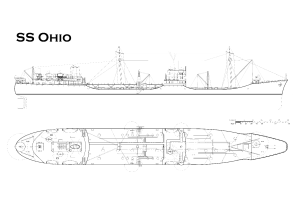
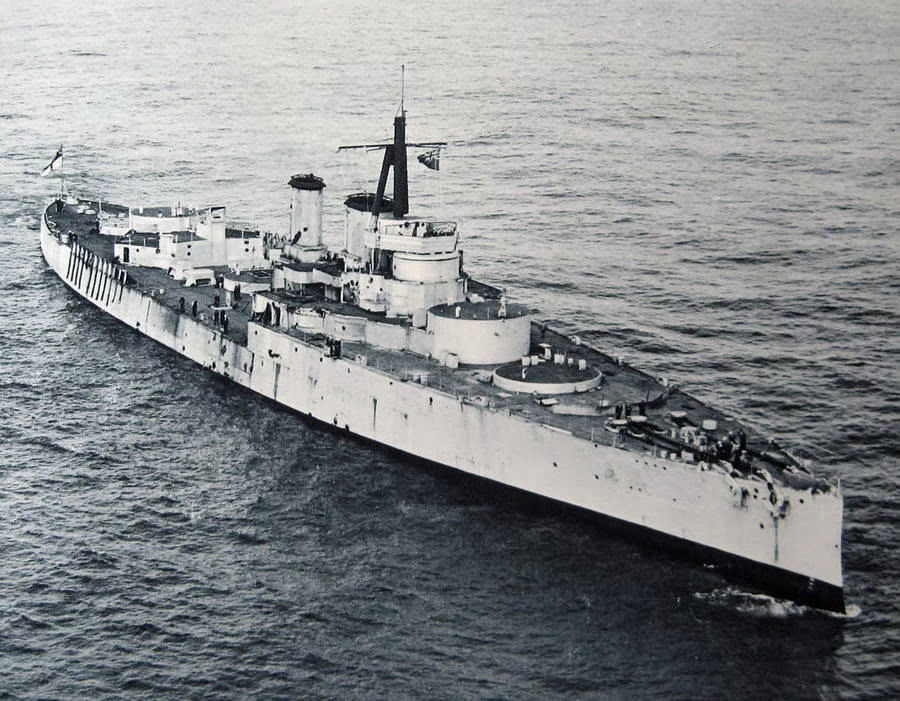
The generally accepted answer is that, yes, SS Ohio, one of only five of the 14 merchant ships to survive Operation Pedestal – and the only tanker – did bring much-needed petrol to Malta in August 1942.
For instance:
- The highly-esteemed author Stephen Roskill in The War At Sea, Vol II, The Period of Balance, London 1956, states on page 306 that “…the fuel she (Ohio) carried enabled air strikes to be restarted.”
- Richard Woodman in Malta Convoys, 1940-1943, page 455, has the view that, “Ohio’s cargo provided fuel for Simpson’s submarines and Park’s aircraft.” However, Woodman somewhat contradicts this when he earlier states, page 355, that “Ohio’s cargo of diesel oil and kerosene was clearly the exception to the loading rule, and made her preservation uniquely important.” Note there is no mention of petrol.
- Wikipedia, the most unreliable source of all, states: “its (Ohio) cargo of aviation fuel revitalised the Maltese air offensive against Axis shipping”.
- The Imperial War Museum has the best photographs of Ohio but the captions state, “The Ohio was probably the most important ship in the convoy with her cargo of 11,000 tons of petrol which was desperately needed to maintain the aircraft flying from Malta”.
However, I believe they are all incorrect in making these statements.
It is my opinion that Ohio did not carry aviation fuel to Malta.
Here are some reasons:
- Michael Pearson, author of The Ohio and Malta; The Legendary Tanker that Refused to Die, on page 45 quotes from the Public Records Office ADM. 237/270 as to fuel loaded on 27 July in Scotland, kerosene at Bowling Oil Wharf and Loch Long from the Norwegian tanker Fjordaas, as follows:
-
- Diesel Oil 1,705.6 tons
- Kerosene 1,894 tons
- Fuel Oil 8,695 tons
- Bunker Fuel 1,300 tons
- Lubricating Oil 15 tons
Note that there is no mention of high-octane or aviation fuel or petrol or avgas in her cargo, call it what you wish – none whatsoever
While Pearson does give some different figures later, on page 116 about Ohio: kerosene 1,430 tons, fuel oil 8,695 tons, bunker fuel 902 tons, lubricating oil 2,000 tons – there is no mention of petrol. He states that 1,705.6 tons of diesel oil and 464 tons of kerosene were lost from Ohio’s damage.
So, how did the low octane (80-87 octane for cars, truck etc.) and high-octane (100-103 octane for aircraft) fuel get to Malta?
- According to Captain Taprell Dorling on page 90 of Blue Star Line At War 1939-1945, MV Melbourne Star’s cargo comprised 1,350 tons of high- octane fuel in 4-gallon “flimsies”, 700 tons of kerosene, 1,450 tons of ammunition and several thousand tons of heavy oil. The 1,350 tons equates to 103,560 “flimsies”. (1,350 x 2,240 lbs per ton = 3,024,000 lbs divided by 29.2 lbs per 4-gallon can = 103,560 cans). This seems a lot of cans to have loaded and stored so some of the petrol must have been delivered in 44-gallon drums. This was a fairly typical load as the various materials that were to be transported to Malta were split up amongst the 13 merchant ships to avoid the chance of any one ship carrying a specialized cargo being lost.
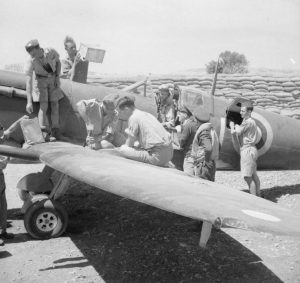
- There are many references to petrol being carried to Malta in this manner in books about Operation Pedestal, the dangers presented thereby and the way this contributed to the demise of several ships.
Tankers which carry highly volatile fuels tend to be quite specialised ships. Even if Ohio had any petrol on board and the means to pump it or decant it ashore, where would it have been pumped or decanted to? There was no large dockside or near dockside storage facility for such highly volatile fuel in Malta harbour at that time. At best, the petrol would have been pumped into motor petrol tankers/fuel bowsers, such as the Bedford QLC which had a nominal 3-ton payload (950 Imp. Gals) or the larger AEC Matador (2,500 Imp. Gal) and transported away from vulnerability near the harbour.
Transported to where?
Even if there had been large and protected motor or aviation-fuel storages, this would have been a slow business especially as there weren’t many such road tankers on Malta. Also, bearing in mind that there were at least two varieties of petrol needed there; low-octane (80-87) used for motor vehicles and high-octane petrol/avgas (circa 100-103 octane) essential for the type of aircraft in use on Malta. Under the circumstances, and in the absence or shortages of a specialised road tanker, it was at the time deemed safer and more practical to have the two types of fuel transported to and within Malta in individual drums or cans. Also, this method allowed for the unloading of fuel from any tanker berthed in Grand Harbour on to any vehicle that moved and for its rapid dispersal to small, self-contained areas so that large reserves could be dispersed and not destroyed in an air raid. The Imperial War Museum has several photographs in its collection showing aircraft being refuelled from 4-gallon cans.
The Malta War Diary for 16 September 1940 stated:
Until underground storage is available, he (the Governor, Lieutenant General Sir William Dobbie) has arranged to import petrol in either 44 gallon drums or 4 gallon tins, until a reserve is amassed equal to eight months’ usage. The new drums and tins will be dispersed as far as possible, to avoid significant loss of supply during air raids.
Operations are also underway to create underground fuel tanks for the Royal Navy and RAF. Scheduled for completion early next year, these will provide immediate secure storage facilities for fuel reserves. [www.maltagc70.com]
An underground tank, or tanks, exist buried in the Corradino Heights at Raz Hanzir which is West of Parlatorio Wharf in French Creek. I have been unable to determine just when such a storage facility was constructed. Other fuel storage, and all conventional, above-ground, was well to the South of Grand Harbour at Birzebbugia and Wied Dalam at Marsaxlokk Harbour. But convoys did not dock there.