Before I read that, I was clearly under the misapprehension that events such as the Red Army and the Battle of Stalingrad and the Battle of Kursk, Operation Torch and the 1st and 2nd Battles of Alamein, the D-Day landings, the RAF and USAAF’s destruction of Germany’s industries, winning the Battle of the Atlantic et al collectively were milestones that changed the tide of the European war. Depending on the prism through which one views these events, it is possible to make a case for any single one of them. Personally, I believe that the moment Hitler embarked on Operation Barbarossa in June 1941 and Japan bombed Pearl Harbour in December were the turning points. Once Russia and America entered the war the result was inevitable. It was just a matter of time.
But two men actually turned the tide of World War II? Wow! That’s incredible – just too fantastic for words. But, I guess, like fake news these days, such wild exaggeration sells, at least to those who do not have the wit to examine and comprehend the facts!
So, let’s look at the basic facts.
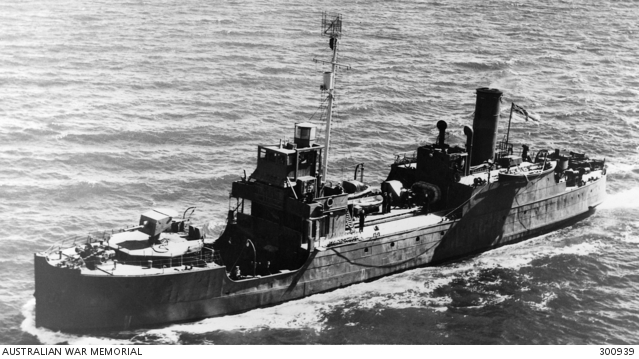
Moses’ book is about Operation Pedestal – the largest naval force then of World War II protecting a 14-ship convoy that was a last-ditch effort to relief the siege of Malta after previous unsuccessful attempts. It centres on the tanker, SS Ohio – a truly remarkable ship under the command of an equally remarkable skipper: Captain Dudley Mason, GC.
Ohio is earmarked by the Axis for destruction and shrugs off numerous attacks. First, she is torpedoed by the Italian submarine Axum as one of a trifecta: the sinking of the anti-aircraft light cruiser HMS Cairo, severely damages the light cruiser HMS Nigeria and rips a huge hole in Ohio’s side. But she continues on only to be bombed, abandoned when ablaze she is reboarded, then bombed many more times suffering even more damage in the process. Two damaged German aircraft, crash onto her decks. Under tow by destroyers in a fashion – for they are ill-suited to the task – the torpedo damage causes a drag to port and one near-miss bomb destroys Ohio’s steering. She is agonisingly close to Malta and barely making way under tow when two American merchant marine sailors are amongst the volunteers to assist Ohio. They apparently man the ship’s sole 40mm Bofors anti-aircraft gun and, in so doing, turn the tide of World War II.
Wow! What an extraordinary achievement!
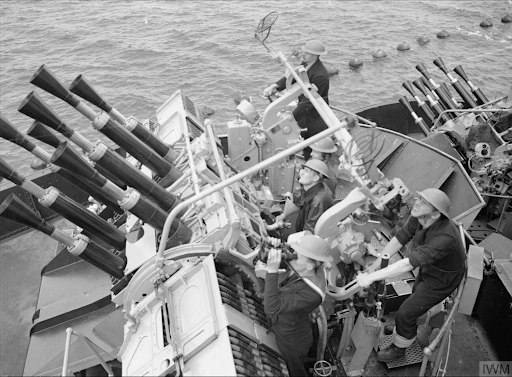
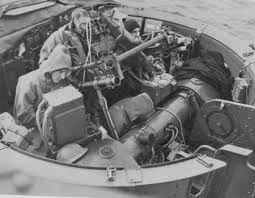
Now, the Bofors was an excellent close-rang automatic anti-aircraft gun and variations of it are still in use today. However, being entirely manually operated, it required careful co-ordination between the gun-layer (who sat on the right-hand side of the mount and trained it in the direction of the target) and the gun-trainer (who elevated the gun’s barrel in the direction of the target) to be effective, plus good team-work from at least three other men to load and keep the gun supplied with four-round clips of ammunition. This co-ordination required lots of training to be effective.
A 40mm Bofors, Mk III. Note at least one man is needed to keep the supply of ammunition up to the loader.
Therefore, ask yourself this: how would two strangers get the hang of how to effectively operate this weapon and particularly under these circumstances? Also, if we assume they did manage this, what did they actually achieve? Were they solely responsible for shooting down either lots of aircraft or one that might have made the difference in Ohio surviving? No, they were not!
Even had they had miraculously done so, how on earth did that turn the tide of World War II? Did it mean that Ohio was THE difference between Malta surviving or being forced to surrender? No, the Pedestal convoy and the four other ships that survived kept Malta in the game – not just Ohio. Even if Malta had been forced to surrender – say, later in the year through starvation or invasion – would that act have changed the war’s outcome? While it may have postponed Operation Husky – the invasion of Sicily in July 1943, I consider this most unlikely.
For more detail, read MALTA’S SAVIOR: OPERATION PEDESTAL AUGUST 1942